
A few words before we start
I spend a lot of time at exhibitions. Not as a collector of badges or business cards, but as someone who watches how brands actually grow – through partnerships, distribution, and sometimes very unexpected structures.
I’m interested in jewellery not only as a product, but as a business system. How brands move from one market to another. How they build trust. How they turn production into predictable cash flow.
Recently, I found myself thinking a lot about non-standard jewellery models – for example, the Mannor Jewelry case in Egypt, where jewellery is integrated into a broader value and incentive structure. It’s very different from classic retail, and I wouldn’t be surprised if similar models start appearing more often.
I wrote about that experience here:
How I Invested in Mannor Jewelry: A Practical Look at a New Jewellery Business and a 312% Annual Return Model
Against that background, ISFJ Expo feels like a very honest event. Not loud. Not flashy. But structurally interesting.
Who ISFJ Expo Is Actually For – and Who Will Be Disappointed
If this is your first time hearing about ISFJ Expo, I recommend starting with a full overview of International Silver & Fashion Jewellery Expo (ISFJ Expo) before deciding whether participation makes sense for your business.
Let’s be clear from the start: ISFJ Expo is not for everyone. And that’s not a weakness – it’s exactly what gives the exhibition its value.
If you are a manufacturer or brand that already understands what you produce, at what price, and for which markets – ISFJ Expo makes sense. Especially if you’re looking for distributors, wholesalers, or private label partners in the Middle East, Africa, or nearby regions.
It also works well if you’re a buyer or sourcing manager who wants to compare suppliers quickly, without endless emails, calls, and samples flying back and forth for months.
Where people get disappointed is when they arrive without clarity.
If your brand is built purely around direct-to-consumer storytelling, if you don’t yet know your real margins, or if discussing MOQs and lead times makes you uncomfortable – this exhibition will feel cold. Nobody is there to “discover” you emotionally. People are there to evaluate, compare, and decide.
ISFJ Expo doesn’t punish unprepared brands – it simply ignores them.
Why Exhibiting at ISFJ Expo Can Make Sense
A lot of brands confuse visibility with progress. ISFJ Expo doesn’t really offer vanity visibility – and that’s the point.
When you exhibit here, you’re not standing in front of tourists or casual visitors. You’re talking to people who already sell jewellery, buy jewellery, or distribute jewellery for a living. Conversations move quickly from “nice design” to “what’s your price, what’s your capacity, and where do you ship”.
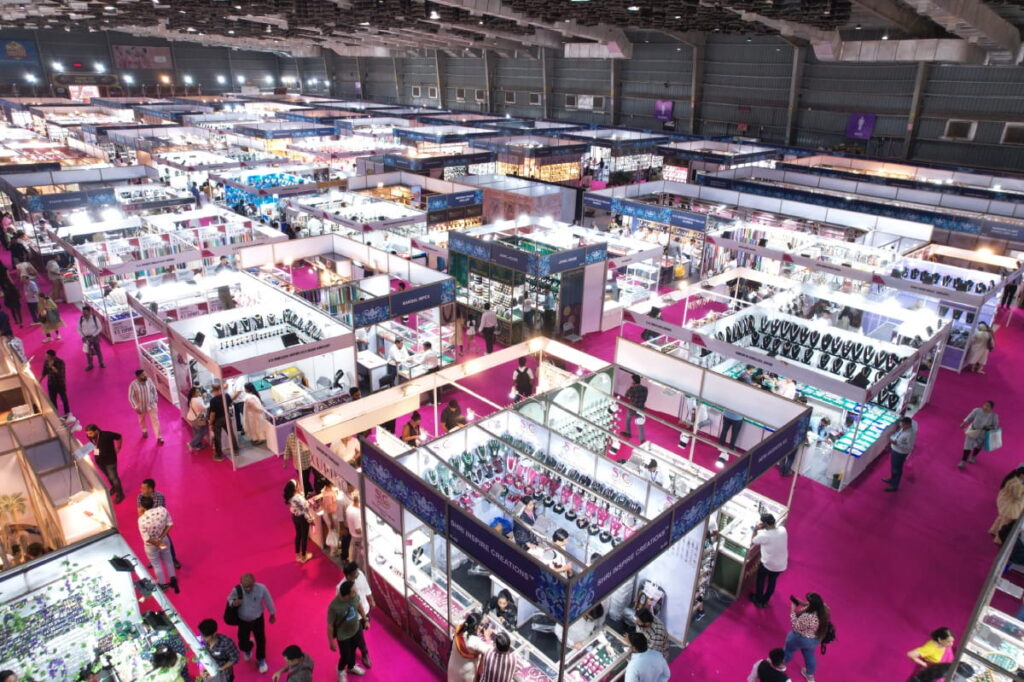
The leads you get are fewer than at big consumer shows – but they’re heavier. A good lead here usually comes with context: where the buyer operates, what volume they’re thinking about, and what kind of cooperation they want.
Another important difference is time. At many exhibitions, sales cycles stretch endlessly after the event. At ISFJ Expo, things move faster. Not because deals are rushed, but because everyone in the room understands the framework. Even if nothing closes on the spot, follow-ups tend to be concrete and time-bound.
Lead Generation & Sales: What Actually Happens (Not the Brochure Version)
One of the biggest myths about B2B exhibitions is the idea of “leads” as numbers. At ISFJ Expo, the word lead means something very specific.
A real lead is not someone who smiles and takes a catalogue. It’s someone who starts asking uncomfortable but necessary questions: pricing structure, production timelines, flexibility, exclusivity, logistics.
Some deals do happen during the exhibition – usually small test orders or first private label agreements. These are rarely massive, but they’re important. They create a working relationship.
Bigger deals usually close later. After internal discussions. After pricing alignment. After trust builds. Brands that treat the exhibition as the first step of a process, not the final act, usually extract the most value.
Those who expect instant miracles usually leave frustrated.
Networking & Partnerships: Less Small Talk, More Substance
Networking at International Silver & Fashion Jewellery Expo (ISFJ Expo) doesn’t look like networking at lifestyle events. There’s less small talk, fewer selfies, and almost no accidental conversations.
Distributors come with a clear agenda. They want to know whether your product fits their market and whether you can deliver consistently.
Private label buyers often arrive with rough ideas rather than finished concepts. They’re testing suppliers as much as designs.
Regional agents are quietly building portfolios – brands they might represent across several markets, not just one.
And for manufacturers, OEM and ODM conversations happen naturally. Not through pitching, but through comparison. When several suppliers stand next to each other, the market reveals itself very quickly.
What’s important to understand is that these partnerships rarely come from cold outreach. They emerge in environments like ISFJ Expo, where trust is built face to face and assumptions are tested immediately.
A calm conclusion (not a sales pitch)
ISFJ Expo is not a magic button. It won’t fix weak positioning or unclear pricing. But for the right type of jewellery business, it can become a very efficient tool – one that fits naturally into an annual strategy instead of standing apart from it.
If you’re considering ISFJ Expo, the right question is not “Will I get leads?”
The right question is: “Am I ready for the type of conversations that happen there?”
If the answer is yes – the exhibition will likely make sense.
Why the Middle East Is One of the Best Test Markets
One of the most underestimated aspects of ISFJ Expo is how well it works as a real-world testing ground for new collections.
The Middle East – and Dubai in particular – sits at a very interesting intersection. Buyers here see a lot. They work with Indian manufacturers, European designers, Turkish suppliers, Asian factories. That exposure makes their feedback unusually sharp.
If a design doesn’t work, you’ll know quickly.
If pricing feels off, it will be mentioned — directly.
If something has potential but needs adjustment, buyers are usually very clear about what exactly needs to change.
This is not the kind of polite, vague feedback you sometimes get at Western shows. At ISFJ Expo, especially in the calm, focused setting of Hyatt Regency Dubai, conversations tend to be practical. Buyers talk about what they can actually sell, not what they admire conceptually.
That’s why many brands quietly use ISFJ Expo not just to sell, but to validate ideas before scaling production or entering new regional markets.
Attending as a Buyer: What You Really Gain
For buyers, ISFJ Expo is efficient in a way that online sourcing never fully is.
Yes, you can find suppliers on platforms and through agents. But what you gain at a focused B2B show is context.
You see how different suppliers price similar products.
You understand what is standard – and what is genuinely differentiated.
You notice how brands position themselves when they stand next to competitors.
Sourcing becomes less abstract. Pricing benchmarks stop being theoretical. Supplier comparison happens naturally, without spreadsheets and endless calls.
And because the event is compact – just two days at Hyatt Regency Dubai – buyers tend to be focused. Meetings are intentional. Conversations are short, but meaningful. You leave with clarity, not just contacts.
Competitive Intelligence: Reading the Market Through ISFJ Expo
If you want to understand where the silver and fashion jewellery market is moving, ISFJ Expo is a surprisingly good place to observe.
You can see who is entering the Middle East market — and from where.
You notice which design directions attract attention, and which quietly get ignored.
You observe what price levels buyers accept without resistance — and where negotiations start.
This kind of intelligence is difficult to get from reports. At exhibitions, it’s visible in behaviour. Which stands are busy. Which collections get revisits. Which conversations turn serious.
For brands and manufacturers, this is often as valuable as direct sales. Sometimes more.
Is ISFJ Expo a Good ROI Event?
This is the question everyone asks – and the honest answer is: it depends on how you approach it.
ISFJ Expo is not a cheap visibility play, but it’s also not an uncontrolled cost sink. Budgets are relatively predictable: stand, travel, samples, time.
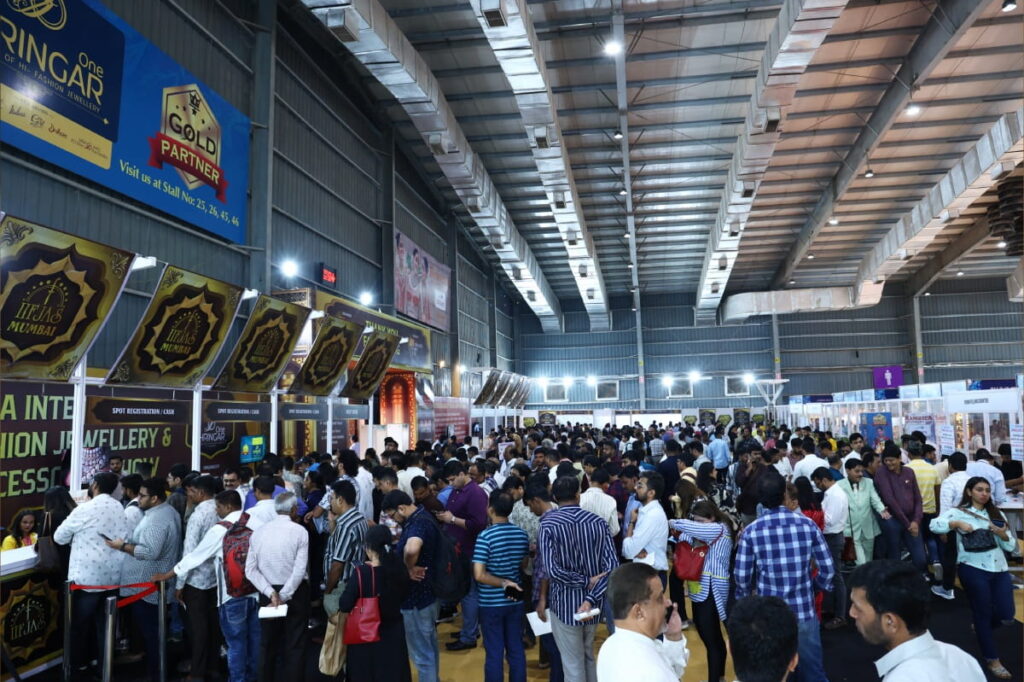
ROI usually appears in three forms:
- Immediate deals – smaller orders, test collaborations, private label pilots.
- Medium-term results – follow-up contracts, distributor agreements, repeat orders.
- Strategic clarity – understanding whether your product actually fits this market.
Where ROI fails is when brands treat the exhibition as a one-off action. Show up, wait for magic, disappear.
Where it works is when ISFJ Expo is seen as a node in a longer strategy, not the destination itself.
Final Thoughts: When ISFJ Expo Makes Strategic Sense
ISFJ Expo makes sense when you stop asking, “Will this exhibition change everything?”
And start asking, “How does this fit into my yearly business logic?”
As a recurring B2B event in Dubai, hosted at a serious venue like Hyatt Regency, it works best when:
- you’re building or expanding distribution in the Middle East,
- you’re refining your product-market fit,
- you’re looking for partners, not applause.
Used that way, ISFJ Expo is not a gamble. It’s a tool.
And like any good tool, its value depends less on the event itself – and more on the clarity of the person using it.